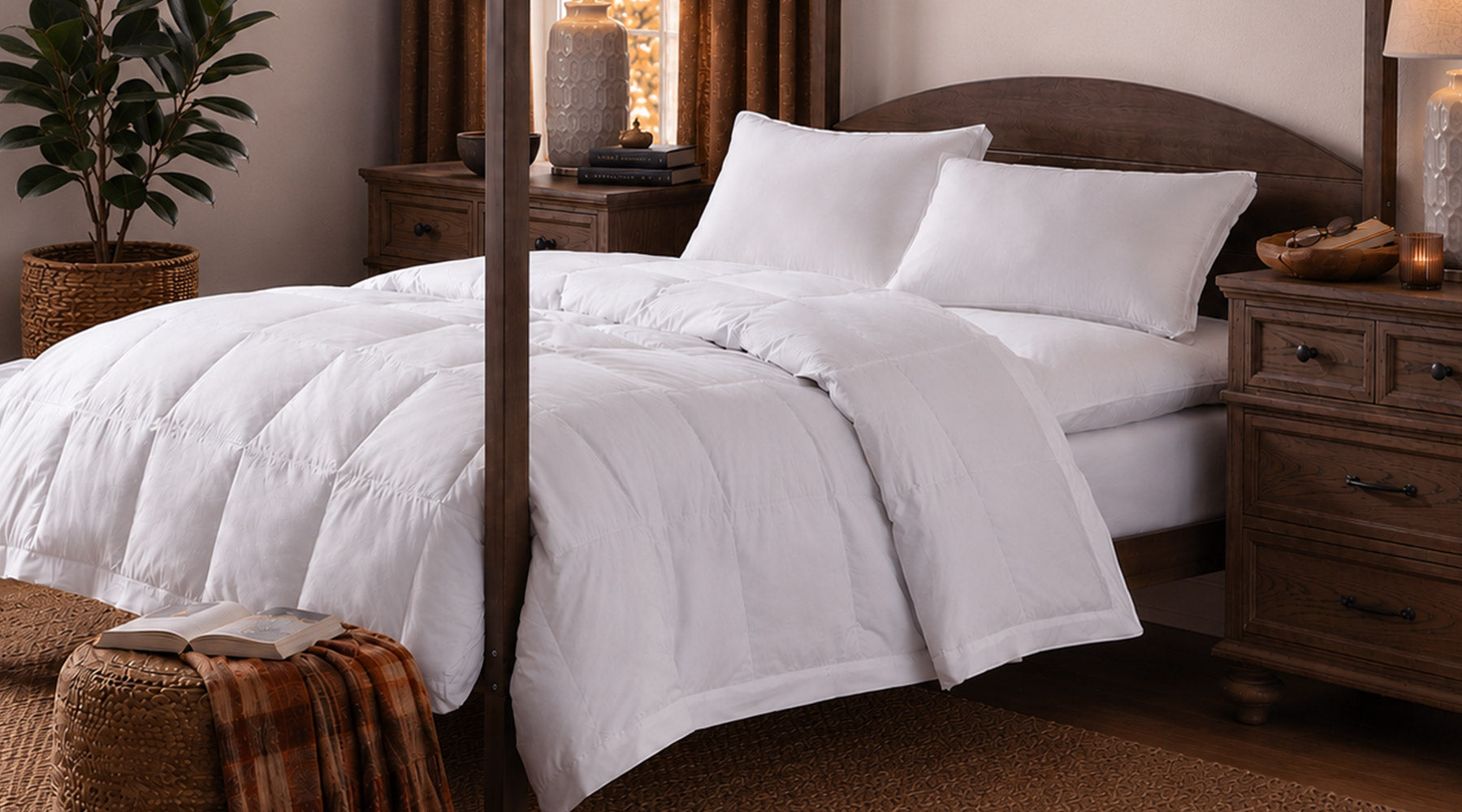
Article: Bedding Wellness: How Your Sleep Space Can Support Better Rest

Bedding Wellness: How Your Sleep Space Can Support Better Rest
Wellness does not stop at nutrition, movement, or self-care routines. The space where you sleep can also influence how comfortable, relaxed, and refreshed you feel each day.
Bedding wellness is the practice of creating a clean, comfortable, and supportive sleep environment. It includes choosing the right pillows, sheets, comforters, protectors, and bedding layers for your personal needs.
Small changes to your bed can make your nightly routine feel calmer and more restorative.
What Is Bedding Wellness?
Bedding wellness is the connection between your sleep environment and your overall sense of comfort and well-being.
A wellness-focused bed should feel:
- Clean and fresh
- Comfortable and supportive
- Breathable
- Easy to maintain
- Appropriate for your sleep temperature
- Calm and inviting
The goal is not to create a perfect bedroom. It is to build a sleep space that helps you feel comfortable and ready to rest.

Start With a Clean Sleep Environment
Fresh bedding can make the entire bedroom feel more comfortable. Sheets collect body oils, sweat, skincare products, dust, and other everyday buildup, so regular washing is an important part of bedding wellness.
Wash sheets and pillowcases according to their care instructions, and allow them to dry completely before returning them to the bed.
Do not forget the less visible layers. Pillow protectors, mattress protectors, blankets, duvet covers, and comforters should also be cleaned as recommended.
Bedding Wellness Tip
Create a simple washing schedule so each layer receives regular care. Weekly sheet washing paired with seasonal deep cleaning can make bedding maintenance feel more manageable.
Choose a Pillow That Supports Your Sleep Style
Your pillow plays an important role in nighttime comfort. It should help support your head and neck while complementing your preferred sleep position.
Side sleepers often prefer a fuller pillow that helps fill the space between the head and shoulder. Back sleepers may feel more comfortable with medium support, while stomach sleepers often prefer a softer, lower-profile pillow.
Over time, pillows may lose their shape, loft, and support. If your pillow feels flat, lumpy, or uncomfortable, it may be time for a refresh.
The DownAround® Feather Pillow combines a supportive feather core with a softer outer layer of down for a balance of structure and comfort.
For a feather-free option, a DreamLoft® Down Alternative Pillow provides plush loft and easy-care comfort.
Hot sleepers may prefer the Comfort Breeze™ Moisture-Wicking Down Alternative Pillow, designed to support a cooler, more comfortable sleep environment.
Use Pillow Protectors for an Extra Layer of Care
A pillow protector sits between your pillow and pillowcase, helping create an additional barrier against everyday moisture, oils, and buildup.
Protectors can also help keep pillows feeling fresher and may extend the usable life of the pillow.
A Classic Pillow Protector is an easy addition to a wellness-focused bed. Pair one with each sleeping pillow, then cover it with your preferred pillowcase.

Select Breathable Sheets
Sheets are the layer closest to your skin, so fabric choice can have a noticeable effect on comfort.
Cotton is a popular bedding material because it is soft, breathable, and versatile. The weave can also change how sheets feel.
Percale Sheets
The Percale Sheet Set offers a crisp, breathable foundation for sleepers who prefer a cooler feel and is often a good choice for warm sleepers or anyone who prefers fresh, airy bedding.
Sateen Sheets
The Sateen Sheet Set provides smooth comfort and a refined finish for a softer, more enveloping sleep experience.
Pay Attention to Sleep Temperature
Temperature can influence how comfortable you feel throughout the night. Bedding that is too heavy may cause overheating, while bedding that is too light may leave you feeling cold. A layered bed makes it easier to adjust your comfort as temperatures change.
Start with breathable sheets, add a lightweight blanket, and finish with a comforter suited to the season. Each layer can be added or removed as needed.
The Comfort Breeze™ Moisture-Wicking Down Alternative Comforter is a useful option for sleepers who want plush comfort with moisture-wicking performance.
An All-Season Down Comforter offers breathable loft and adaptable warmth for use throughout much of the year.
For a feather-free choice, the Down Alternative Comforter provides cozy coverage with easy-care convenience.
Protect Your Mattress
A mattress protector is another important part of bedding wellness. It helps shield the mattress from spills, moisture, dust, and everyday wear.
Because a mattress is difficult to clean, using a protector can help preserve the sleep surface and create a cleaner bedding system.
Choose a protector that fits securely without changing the feel of your mattress.

Build Comfort With Adjustable Layers
One heavy layer is not always the most comfortable solution. Several lighter layers give you more flexibility and can help you respond to changes in room temperature.
A wellness-focused bedding system may include:
- A mattress protector
- Breathable fitted and flat sheets
- A lightweight blanket
- An all-season comforter
- A duvet cover
- Supportive pillows with protectors
- A throw at the foot of the bed
This setup allows you to personalize your comfort without remaking the entire bed each season.
Reduce Clutter Around the Bed
Visual clutter can make a bedroom feel less calming. Keep the area around your bed simple and intentional. Remove items that do not support sleep, comfort, or relaxation. Store extra bedding neatly, limit decorative pieces, and leave enough space for the room to feel open.
A few thoughtfully chosen pillows and layers can feel more restful than a bed crowded with unnecessary accessories.
Create a Calming Bedtime Routine
Your bedding can support a broader evening wellness routine. Turn down the bed before bedtime, smooth the sheets, adjust the pillows, and lower the room temperature if needed. These small actions can signal that the day is ending.
You may also want to:
- Dim overhead lighting
- Keep screens away from the bed
- Use breathable sleepwear
- Prepare water for the night
- Keep the bedroom quiet and comfortable
- Maintain a consistent bedtime
The bed becomes more than a place to sleep. It becomes part of a routine that supports rest.
Refresh Bedding With the Seasons
Seasonal changes are a useful reminder to inspect and refresh your bedding.
In spring and summer, focus on breathable fabrics and lighter layers. In fall and winter, introduce blankets, loftier comforters, and warmer textures.
Use each seasonal transition to check for:
- Flat or uncomfortable pillows
- Stains or visible wear
- Loose elastic on fitted sheets
- Lumpy comforter fill
- Damaged protectors
- Bedding that no longer suits your temperature needs
- Replacing one or two worn pieces can improve the comfort of the entire bed.
Bedding Wellness Checklist
Use this checklist to evaluate your current sleep space:
- Are your sheets clean and comfortable?
- Does your pillow support your sleep position?
- Are your pillows protected?
- Does your bedding help regulate temperature?
- Is your comforter appropriate for the season?
- Is your mattress protected?
- Are worn bedding items ready to be replaced?
- Does your bed feel calm and inviting?
- Can layers be adjusted easily?
- Is your bedding simple to clean and maintain?

Create a Sleep Space That Supports You
Bedding wellness is about making thoughtful choices that support comfort, cleanliness, and rest.
Begin with breathable sheets, supportive pillows, protective layers, and a comforter suited to your temperature preferences. Keep the bed fresh, easy to maintain, and flexible enough to change with the seasons.
A well-prepared bed can help turn your bedroom into a place that feels calmer, cleaner, and more comfortable at the end of every day.
Explore Restful Nights bedding essentials designed to support a more comfortable sleep environment.
Frequently Asked Questions About Bedding Wellness
What does bedding wellness mean?
Bedding wellness means creating a sleep environment that supports comfort, cleanliness, temperature regulation, and relaxation.
How often should sheets be washed?
Many people wash sheets and pillowcases about once a week. Washing frequency may vary based on personal preference, sleep habits, pets, allergies, and product care instructions.
How do I know when to replace my pillow?
Consider replacing a pillow when it becomes flat, lumpy, stained, uncomfortable, or no longer returns to its original shape.
Are pillow protectors necessary?
Pillow protectors are not required, but they add a useful barrier between the pillow and pillowcase and can help keep pillows fresher.
What sheets are best for hot sleepers?
Breathable cotton percale sheets are often a comfortable choice for hot sleepers because they feel crisp and lightweight.
What comforter is best for year-round use?
An all-season comforter is designed to provide adaptable warmth throughout much of the year. Individual comfort needs may vary.
How can I make my bed feel more calming?
Use clean bedding, supportive pillows, breathable layers, soft textures, and a simple color palette. Reducing clutter can also help the bedroom feel more peaceful.
How many bedding layers should I use?
The right number depends on your sleep temperature and the season. Sheets, one lightweight blanket, and a comforter provide a flexible starting point for many sleepers.